
Reliable Data Acquisition Systems Built for Precision Monitoring
Enhance operational efficiency and real-time insights with Load Force Measurement’s advanced DAQs for industrial and field use.
Data acquisition systems (DAQs) collect signals from sensors such as load cells and strain gauges and convert them into digital measurement data.

Overview
Tension Load Cells
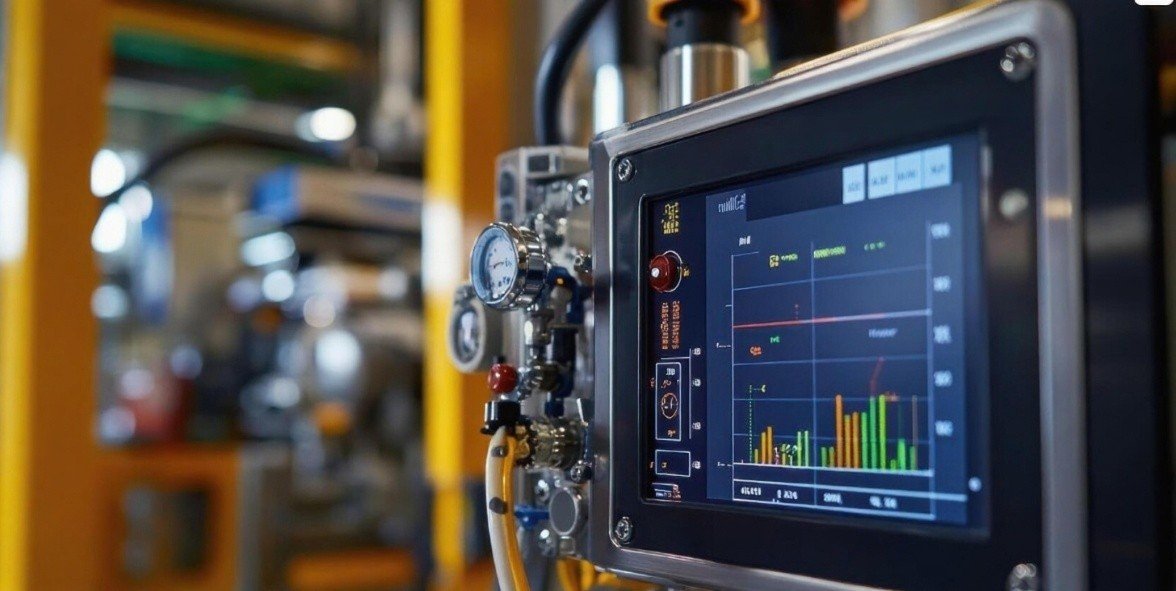
Data Acquisition Systems (DAQs) are essential tools for capturing, monitoring, and analyzing real-world physical signals from various sensors and equipment. These systems collect and convert analog inputs such as force, temperature, strain, or vibration into digital data for precise analysis, real-time control, and intelligent decision-making. Scalable and versatile, modern DAQs play a crucial role across industries in enabling predictive maintenance, performance optimization, and safety assurance.
Load Force Measurement delivers reliable DAQ solutions tailored for today’s data-driven environments. Serving North America’s growing B2B market, we offer high-performance load cell measurement solutions that seamlessly integrate with load cell interface cables and junction boxes and monitoring platforms. From industrial automation to structural diagnostics, our systems are backed by cutting-edge research, quality control processes, and expert guidance—helping customers unlock smarter, scalable operations and streamlined data workflows.
1. Sensor Integration Modules
Supported Sensor Types:
- Strain gauges
- Thermocouples
- RTDs
- Voltage & current signals
- Displacement sensors
Sensor Input Interface:
- GAO Tek 16-Channel Thermocouple Input DAQ Module
- High-precision analog inputs with cold-junction compensation
- Ideal for multi-point temperature monitoring
- GAO Tek Strain Gauge Signal Conditioner Module
- Converts microvolt signals from load or torque sensors to DAQ-compatible levels
- Offers selectable gain settings for flexible input calibration
2. Signal Conditioning & Processing
Signal Amplification and Filtering:
- GAO Tek Programmable Signal Conditioner
- Supports voltage, current, thermocouple, and bridge inputs
- Features programmable gain, filtering, and offset adjustments
- Enables clean and calibrated signals for acquisition
Multiplexing Support:
- GAO Tek Analog Multiplexer Expansion Unit
- Allows multiplexed sampling from multiple analog sensors
- Helps reduce hardware footprint in distributed setups
3. Data Acquisition Hardware
Primary DAQ Hardware:
- GAO Tek USB-Based Multi-Channel Data Logger
- High-speed USB interface
- 8 or 16 analog input channels with high-resolution ADC
- PC-based configuration and live monitoring
- Used for real-time measurements in labs or fixed locations
Wireless DAQ Option (Remote/Field):
- GAO RFID Wireless Sensor Network Data Logger
- Compatible with Zigbee or 433 MHz RF
- Battery-powered with onboard data storage
- Sends data to a central receiver or edge gateway
4. Connectivity & Communication
Wireless Gateway:
- GAO RFID Industrial IoT Gateway
- Receives signals from wireless DAQ nodes
- Supports MQTT, HTTP, and Modbus protocols
- Connects with cloud systems or local networks for further processing
Field Deployment Use:
- GAO Tek RS485-to-Wi-Fi Converter Module
- Enables RS485-based DAQ devices to communicate wirelessly
Used in scenarios with legacy industrial hardware
5. Power Supply
Power Management:
- GAO Tek Rugged Battery Pack with Solar Charging Capability
- Ideal for off-grid DAQ installations
- Supports long-term unattended operation
Backup Supply:
- GAO RFID Low-Power Energy Harvesting Module
- Captures ambient mechanical energy or vibration
- Supports continuous power for low-energy DAQ nodes
6. Data Monitoring & Visualization Software
Software Platform:
- GAO RFID Web-Based Monitoring Dashboard
- Features:
- Real-time data visualization from multiple DAQ nodes
- User-defined alerts and thresholds
- Historical data logging and export to CSV/Excel
- Secure access for remote monitoring
- Features:
Integration Capabilities:
- GAO Tek REST API Toolkit
- Enables seamless integration with enterprise systems, analytics software, or industrial automation platforms
- Supports real-time data streaming to cloud or SCADA systems
GAO-Based Data Acquisition System (DAQ) Design
Partnerships
Expanding Our Solutions with Global Technology Leaders
In addition to offering products and systems developed by our team and trusted partners for Data Acquisition Systems (DAQs), we are proud to carry top-tier technologies from Global Advanced Operations Tek Inc. (GAO Tek Inc.) and Global Advanced Operations RFID Inc. (GAO RFID Inc.). These reliable, high-quality products and systems enhance our ability to deliver comprehensive technologies, integrations, and services you can trust. Our solutions also complement advanced industrial AI and automation technologies, supporting connected operations, intelligent monitoring, and data-driven industrial environments. Where relevant, we have provided direct links to select products and systems from GAO Tek Inc. and GAO RFID Inc.
Key Features and Functionalities
Multi-Channel Input Support: Simultaneous data capture from diverse sensor types
Built-In Signal Conditioning: Supports voltage, current, strain gauge, RTDs, and thermocouples
Cloud & Local Storage Integration: Supports data streaming, logging, and remote access
Compatibility
Our DAQ systems are designed to work with:
- Load cells, strain gauges, pressure sensors
- Wireless sensor nodes and gateways
- Edge analytics modules and PLCs
- SCADA systems, BMS, and IoT platforms
- Windows- and Linux-based monitoring software
- APIs for integration with third-party applications
Applications
- Structural health monitoring of bridges and buildings
- Factory automation and machine diagnostics
- Aerospace and automotive component testing
- Energy infrastructure monitoring (wind, solar, grid)
- Research and laboratory data logging
- Environmental and geotechnical instrumentation
Industries We Serve
- Civil & Structural Engineering
- Manufacturing & Automation
- Energy & Utilities
- Transportation & Logistics
- Aerospace & Defense
- Environmental Monitoring
- Research & Development
Industries We Serve
- Civil & Structural Engineering
- Manufacturing & Automation
- Energy & Utilities
- Transportation & Logistics
- Aerospace & Defense
- Environmental Monitoring
- Research & Development
Relevant U.S. and Canadian Industry Standards
- IEEE 1451 – Smart Transducer Interface for Sensors and Actuators
- NEMA 250 – Enclosures for Electrical Equipment
- ASTM E287 – Temperature Measurement and Calibration Standards
- CSA C22.2 No. 213 – Hazardous Location Equipment Compliance
- ANSI/ISA-20 – Specification Forms for Process Instrumentation
United States – Bridge Stress Monitoring, Colorado
Our DAQ systems were deployed for long-term bridge integrity monitoring using strain gauges and temperature sensors. The system captured dynamic stress responses to seasonal and traffic loads, enabling the Department of Transportation to prioritize maintenance operations and extend service life
United States – Wind Farm Load Analysis, Illinois
A renewable energy client implemented Load Force Measurement’s modular DAQ units across multiple wind turbines. Real-time vibration and torque data was streamed to a centralized platform, improving turbine performance and reducing unplanned outages
Canada – Laboratory Vibration Research, Ontario
A university research team used our portable DAQ systems to study vibration behavior in composite materials. The ease of calibration, high sampling rate, and compatibility with existing sensors made our systems ideal for academic testing environments
Case Studies
Interested in upgrading your measurement systems with robust and scalable DAQ solutions?
Let Load Force Measurement help you design, deploy, and support the right system for your specific needs. Contact us now for product demos, consultations, or technical support
Frequently Asked Questions About Data Acquisition Systems
Explore answers to common questions about data acquisition systems, industrial DAQ hardware, sensor integration, and load cell measurement.
What are data acquisition systems (DAQs)?
Data acquisition systems (DAQs) are electronic systems that collect, convert, process, and record measurement signals from connected sensors and instruments. They convert analog signals into digital information that engineers can monitor and analyze using computers, industrial software, and control platforms.
How does a data acquisition system work?
A data acquisition system receives electrical signals from connected sensors, conditions and amplifies those signals, and converts them into digital data using an analog-to-digital converter. The collected information can then be displayed, stored, analyzed, and shared through compatible monitoring software.
What are the main components of a DAQ system?
The main components typically include sensors or transducers, signal conditioning hardware, analog-to-digital converters, data acquisition hardware, communication interfaces, and data acquisition software. Together, these components collect measurement information and make it available for monitoring and analysis.
Can data acquisition systems work with load cells?
Yes. Compatible data acquisition systems can connect to load cells through suitable signal conditioning and measurement interfaces. They capture electrical signals generated by load cells and convert them into digital measurement data for force, weight, compression, tension, and other testing applications.
What is the difference between wired and wireless data acquisition systems?
Wired DAQ systems transmit measurement signals through physical connections such as USB, Ethernet, or RS485. Wireless DAQ systems transmit sensor data using supported radio or wireless communication technologies. The appropriate option depends on installation requirements, transmission range, reliability, and operating environment.
What is the sampling rate of a data acquisition system?
The sampling rate is the number of measurements a DAQ system captures per second. It is commonly expressed in samples per second (S/s). The required sampling rate depends on the speed of the measured signal, measurement objectives, and the specifications of the connected sensors and hardware.
What industries use industrial data acquisition systems?
Industrial DAQ systems are used in manufacturing, automotive testing, aerospace, civil engineering, energy infrastructure, research laboratories, and environmental monitoring. They help collect measurements such as force, weight, pressure, temperature, strain, and vibration for testing and operational monitoring.
How do I choose the right data acquisition system?
Choose a DAQ system based on sensor compatibility, input channels, sampling rate, ADC resolution, measurement accuracy, signal conditioning, connectivity, software compatibility, and installation environment. For load cell and force measurement applications, ensure the selected system supports the required bridge inputs and sensor excitation.
Need Help Choosing the Right DAQ System?
Contact Load Force Measurement for guidance on data acquisition hardware, sensor integration, and industrial measurement solutions.